
俄罗斯转盘
比尔·盖茨:为彼此做的最好的事_我的网站

一 | 二十年前,如果你生活在疟疾流行的100个国家之一,当孩子出现发烧和发冷的症状,你大概率无法得到一个明确的诊断。即便你去的诊所做出正确诊断,但因为普遍存在耐药性问题,你还是难以买到有效的药物。
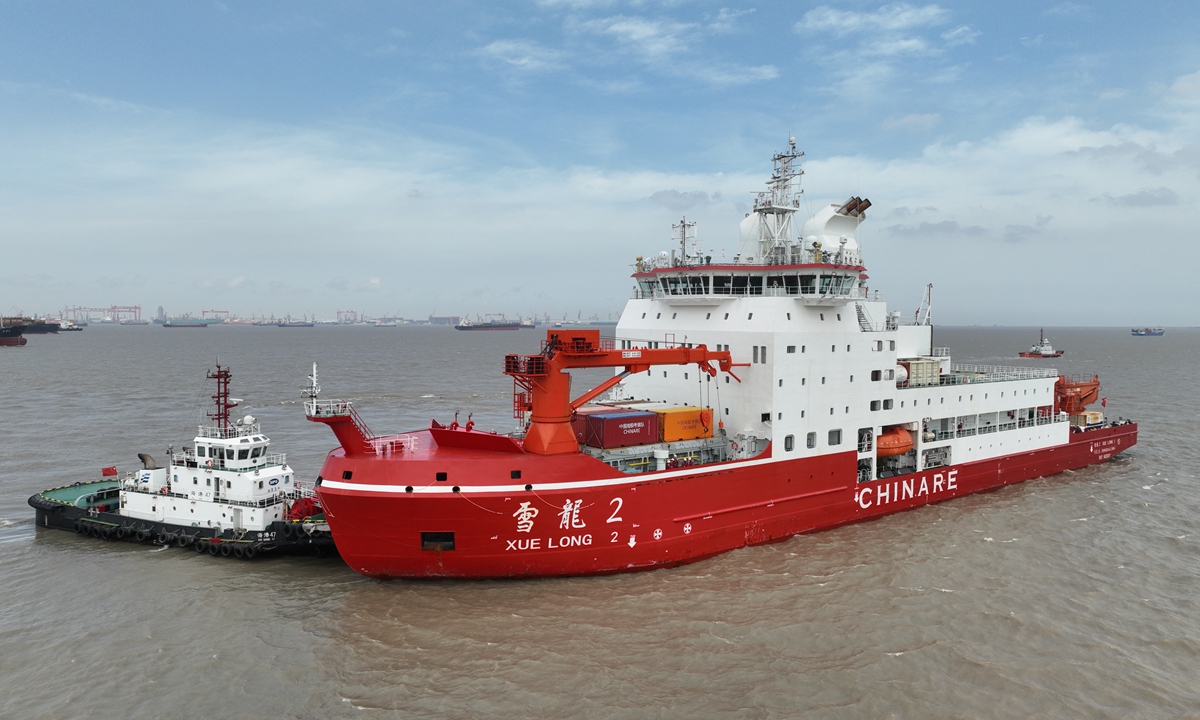
After completing the first stage of comprehensive ocean station surveys on Friday, Xuelong 2 sailed toward higher latitudes and selected a large, relatively flat piece of sea ice about 1.5 meters thick in a densely packed ice zone for its first ice station.
According to Lin Long, captain of the Xuelong 2 sea ice team, the ice station survey conducted by the vessel during this voyage will include six short-term ice stations and one long-term ice station, the Xinhua News Agency reported Sunday.
More than 20 types of scientific operations will be carried out, including the deployment of expendable ice-based buoys, snow and ice-core sampling, under-ice water sampling, sea-ice remote sensing, atmospheric profiling and under-ice oceanographic observations.
Lan Musheng, assistant to the chief scientist of the expedition, said the researchers will comprehensively monitor changes in parameters related to the atmosphere, sea ice, upper ocean and ecological processes beneath the ice as the sea ice melts.
The observations will provide scientific data for studying the rapid changes in Arctic sea ice, the mechanisms behind those changes and the evolution of Arctic ecosystems.
The ice station work is part of China's 16th Arctic Ocean scientific expedition, which was organized by the Ministry of Natural Resources. The expedition set sail from Dalian, Northeast China's Liaoning Province on July 3.
The mission is being carried out by four vessels - Xuelong, Xuelong 2, Jidi and Tansuo-3 - and is expected to be completed in early October.
The expedition is focusing on comprehensive surveys of sea ice, hydrology, biology, ecology and the atmospheric environment in key areas of the Arctic Ocean.
The two icebreakers Xuelong and Xuelong 2 will work together on the ice station surveys. Xuelong completed surveys at 12 ice stations on Friday.
Lin said the ice station locations planned for Xuelong 2 will work in coordination with those of Xuelong to form an observation array.
The arrangement will allow researchers to more deeply investigate the interactions among the atmosphere, sea ice and ocean in the central Arctic Ocean amid rapid environmental changes, as well as their coupling effects with the ecosystem.
The expedition is being conducted against a backdrop of rapid changes in the Arctic environment.
When the mission was launched in July, expedition leader Wang Jinhui said that global warming was driving rapid and profound changes in the Arctic natural environment, with trends such as sea-ice melting intensifying.
The expedition is therefore designed not only to monitor environmental changes but also to investigate frontier scientific questions, including the dynamic evolution of the oceanic crust.
Working on sea ice also presents significant safety challenges. Low temperatures and complex ice-surface conditions can pose risks to researchers, while polar bears are considered the biggest safety risk during ice station operations.
The expedition team has therefore formulated specific bear-prevention and emergency response plans and equipped personnel with various types of bear-deterrence equipment and emergency supplies to ensure their safety.
。
■ 卢旺达的鲁米翁扎,一名社区卫生工作者在孩子妈妈的帮助下,监测男孩的营养摄入量。

二 | 全球基金通过卢旺达卫生部支持了该计划卫生官员很可能永远不会知道,在你的社区有多少孩子患病,又有多少人对药物毫无反应。这意味着他们无法筹划正确的干预措施,科学家也无法获得开发新药所需的信息。那个时候,这些进步尚未发生:一个庞大的训练有素的社区卫生工作者网络,挨家挨户进行快速检测并分发高效的药物;将每个疟疾病例的信息通过移动设备发送到一个综合数据系统,以便卫生官员迅速应对疫情,科学家跟踪耐药性;大规模分发药浸蚊帐,大大降低了孩子感染疟疾的机会。

三 | 我所说的“那个时候”,指的正是在全球基金成立之前。过去二十年来,抗击艾滋病、结核病和疟疾的全球基金与政府、非营利组织和社区紧密合作,利用现有工具并不断投资于新方法,抗击这些疾病。捍卫全球健康的“瑞士军刀”很早之前我就说,全球基金是人们能为彼此做的最好的事情之一,也是最有效的事情之一。过去二十年,全球基金支持的项目已将艾滋病、结核病和疟疾造成的死亡人数减少了一半以上,挽救了5000多万人的生命。在撒哈拉以南非洲,预期寿命增加了12年,这在一定程度上要归功于全球基金。全球基金是捍卫全球健康的“瑞士军刀”——它配备了许多工具,能解决许多问题。

四 | 有时这些问题并非艾滋病、结核病或疟疾。全球基金给这些疾病的防治带来了变革,同时在新冠大流行期间,对抗击新冠产生了重大影响。
■ 2021年全球基金提供的赠款在艾滋病、结核病、疟疾领域所占的比例 / 全球基金可以毫不夸张地说,因为全球基金,低收入国家,乃至全世界,避免了新冠大流行期间最糟糕情况的发生,因为全球基金让这些成为了可能:实验室能力、诊断测试、卫生工作者,甚至是促成了快速和互信合作的多边关系。最重要的是,全球基金一直是向低收入国家提供新冠应对资金(除用于疫苗外)的最大捐助者。在乌干达,死亡人数直线下降,希望升起要了解全球基金的投资对一个国家的意义,可以看看乌干达的例子。

五 | 乌干达长期以来一直在与艾滋病、结核病和疟疾斗争,并且取得了巨大的成就。自全球基金成立以来,那里的艾滋病死亡人数下降了75%,疟疾死亡人数下降了57%。结核病死亡人数虽然有所增加,但如果没有这些控制措施,死亡人数将高出10倍。也因为有了全球基金,乌干达得以在新冠袭来时迅速做出反应:● 因为有了多年搭建起来的关系和物流能力,当氧气瓶出现短缺,全球基金采购了氧气瓶并送至乌干达的各个医院。● 政府和私营部门已经到位的金融工具和赠款使得快速筹资成为可能。● 社区信任的卫生工作者,一直在做艾滋病、结核病和疟疾的诊断和治疗,能迅速转向提供新冠的检测服务。诊断设备被调整为新冠检测。乌干达近四分之三的新冠检测由全球基金促成。
■ 在应对艾滋病、结核病和疟疾方面,全球基金主要的投资 / 全球基金面对这一历史性威胁,因为有了全球基金,世界的状况要好得多。

六 | 尽管如此,新冠还是给世界带来了沉重打击。

七 | 疟疾死亡人数正在上升,结核病死亡人数也在上升。抗击艾滋病的进展正在放缓。用了20年时间才将这些疾病的死亡人数减少了一半,我们等不了下一个20年再减少一半。因为,尽管现在的情况已经有了很大的改善,但每分钟仍有一名儿童死于疟疾。我们知道什么是有效的。惊人的创新正在到来,比如更好的疫苗和诊断方法,克服耐药性的新药,以及控制疟疾威胁的创新方法——比如能杀死蚊子的糖饵,且只会杀死蚊子(对人类无害)。一旦这些新的工具准备就绪,全球基金就将提供资源,把它们从实验室带到社区。换句话说,全球基金是其中最重要的创新。为什么盖茨基金会承诺向全球基金增资9.12亿美元在盖茨基金会,我们全力投入全球基金——自其成立以来,一直如此。本月,我们承诺到2026年,向全球基金增资9.12亿美元。我们请求各国领导人也做出重大承诺,这样世界就有机会实现联合国的可持续发展目标。政府、私营部门和非营利组织都在全球基金的成功中发挥了巨大作用——也是其未来发展的关键。

八 | 如果每个人都能尽一份力,全球基金就能在三年内,从艾滋病、结核病和疟疾这些顽疾手中挽救2000万人的生命。不仅如此,它还可以继续武装世界,应对尚未出现的威胁。(盖茨基金会)。
Current article:http://70eigu.miaorediancuisuilianzouguang.cyou/list_z99t/nlmjt7f.html
Published on:15:33:06


