
12306How Kaifeng is winning foreign hearts with Song culture and open inclusiveness_我的网站
一 |  Fireworks bloomed in golden-red sparks across the night sky, the hems of Hanfu skirts swaying gently in the glow of the lanterns, while the steam from soup dumplings mingled with the bustling sounds of the marketplace. Several foreign tourists held up their phones to capture the atmosphere. This was an ordinary day in Kaifeng, Central China's Henan Province, yet every corner brimmed with the lively atmosphere of Song-era life and an open, welcoming warmth. This city, once known as Bianliang, the capital of the Northern Song Dynasty a thousand years ago, was already a thriving metropolis that broke the boundaries of traditional wards and markets and opened gates to promote maritime foreign trade. Today, it continues to carry forward the unique charm of Song culture and an atmosphere of openness and inclusiveness, drawing an increasing number of international visitors — people who are not merely passing through, but many who have chosen to work and live here. Among them is Xiao Feifei, a performer from Ghana who has been working in Kaifeng for more than a year. "When I first arrived in Kaifeng, there weren't many foreign visitors in the scenic areas. Now I meet new visitors almost every day — some are European tourists who decided to come on the spur of the moment thanks to convenient visa policies, others are families who specifically bring their children to experience Song culture," he said. The figures confirm this change: in the first half of 2026, the number of inbound tourists to Kaifeng grew by approximately 130 percent year-on-year, with source markets expanding beyond the traditional Hong Kong, Macao, and Taiwan regions to include multiple countries in Southeast Asia, Europe, and North America. Why are more and more foreigners willing to come to Kaifeng — and even stay? When Global Times reporters walked through the city, the answers gradually became clear. 'A home to stay' Xiao Feifei's story with the city begins in 2025. He arrived in Kaifeng and worked as an acrobat and performer in the Wansuishan Martial Arts City, a Disney-style theme park that features many scenes and plays inspired by "Outlaws of the Marsh." At first he viewed it as just a job — finish each performance to earn a living. But as time passed, he found himself increasingly unable to leave. "The most unforgettable moment for me was one day after a performance, just as I was about to rest, a security guard wheeled over a boy who was my fan. Unable to speak, he simply stretched out his arms with all his strength, asking for a hug. I bent down and gently held him. In that instant, a tenderness I had never felt before welled up inside me," Xiao Feifei told the Global Times. "There are also the children who call me 'big bro.' They post videos online looking for me and specially come to play with me. These moments make me feel that I am not merely working — I am truly bringing joy to others," he noted. It was this sense of purpose, of being accepted and warmly embraced that made Xiao Feifei decide to stay. "I feel the inclusiveness and care of the people here every day. This is how I understand Chinese culture," he said. "Kaifeng has become my second home." Xiao Feifei is not alone. The scenic area now has more than 200 foreign performers and staff. Zhao Kuan, general manager of Wansuishan Martial Arts City, explained that while the park is rooted in traditional Chinese wuxia culture -- a genre of Chinese fiction or cinema featuring the adventures of martial artists in ancient China, it also incorporates elements from foreign martial traditions, such as Zorro-style figures. "This allows overseas visitors to find a sense of familiarity while experiencing something uniquely Chinese," Zhao said. "It reflects the open and inclusive spirit of Song culture itself." Currently, more than 3,000 performances of various sizes themed around wuxia culture — including live-action martial arts dramas and character model shows — are staged every day. Immersive experience Martin, a computer technology teacher from Eindhoven in the Netherlands, is visiting China for the first time. This two-week trip has taken him through several cities, and the Millennium City Park, a Song Dynasty-themed park in Kaifeng marks one of his final stops before heading home. "The moment you step into the park, you are immediately immersed. The colors, the lights, the performances — everything is perfectly coordinated. Even though I don't understand the dialogue, I can clearly feel the historical atmosphere of the ancient Song Dynasty and its everyday street life. It's not simply about performance tricks; it's telling a real story that makes you feel as if you've traveled back in time," Martin told the Global Times. Millennium City Park is modeled on the renowned painting the Qingming Festival by the Riverside, recreating the street scenes, everyday life, and live performances of the Song Dynasty. Centered on Hanfu styling and makeup, intangible cultural heritage handicrafts, park-wide NPC interactions, and large-scale live shows, the scenic area transforms Song Dynasty rituals, folk customs, aesthetics, and the spirit of family and nation into living scenes that visitors can wear, make, watch, and interact with, an employee from the park told the Global Times. Foreign tourists need no direct historical knowledge or language skills to appreciate the elegance and vibrant street life of the Song people through costume, hands-on crafts, performances, and interactions, he noted. 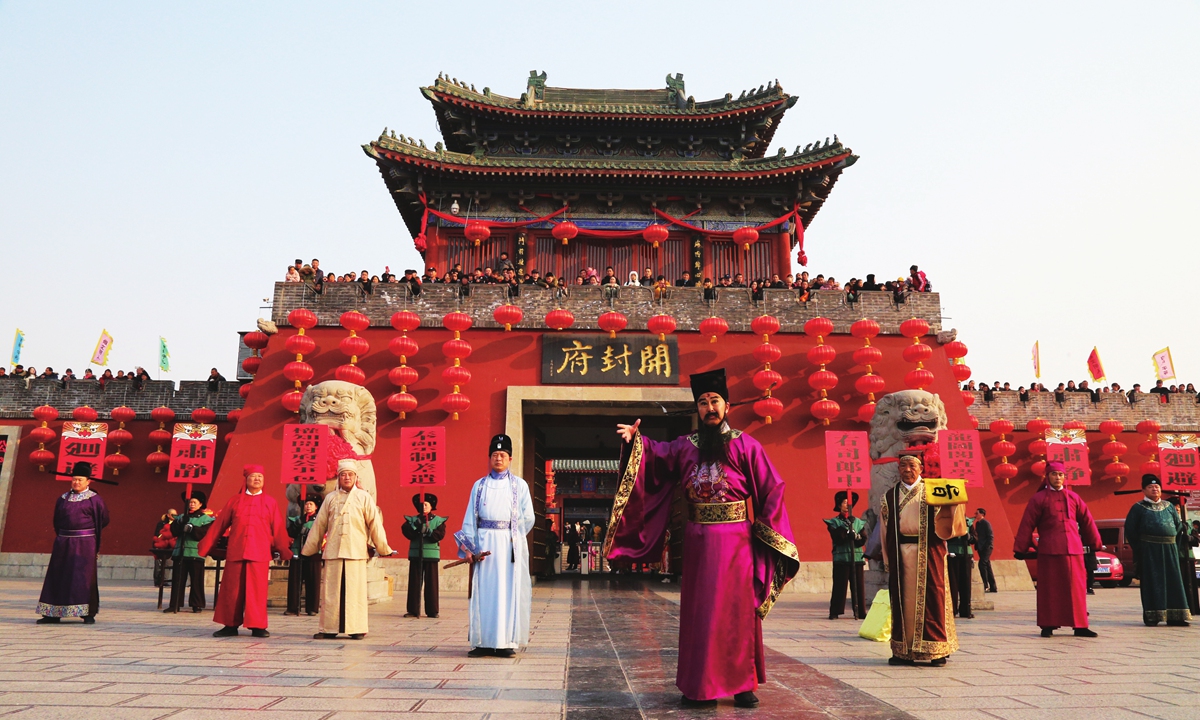 Thai blogger Ake has loved the "Justice Bao" series of films and TV dramas since childhood and has long admired the culture of integrity and chivalry embodied by Bao Zheng, the legendary judge who lived from 999 to 1062 with his expert handling of criminal cases, his fearlessness in giving straightforward advice, and his deep resentment of evil deeds. When he visited the Ancient Kaifeng County Government, known as the first government office in Ancient China, he actively took part in a simulated court-hearing experience, personally feeling the trial process of a Northern Song prefectural government. He even had the opportunity to take a photo with the actor playing Bao Zheng after performance. "The culture of integrity and the rule of law represented by Bao Zheng serves as a shared emotional resonance for tourists both at home and abroad. The spiritual core of fairness, justice, and caring for the people for the public good resonates with the common aspirations of people from different regions," Duan Bo, the general manager, told the Global Times. The scenic area centers on recreating feel and style of the Northern Song government, including the main court hall and the council hall. Combined with a series of live-action performances centered around Bao Gong's case trials, it allows visitors to gain an intuitive understanding of how the prefectural government operated at that time, he added. Unique attraction Kaifeng, known as China's "Ancient Capital of Eight Dynasties," became the world's first metropolis with a population of one million during the Northern Song Dynasty. It features a globally unique "city-upon-city" wonder of six stacked cities, and its central axis has remained unchanged for a thousand years, Liu Dong, deputy director of Kaifeng Municipal Bureau of Culture, Radio, Television and Tourism, told the Global Times. In addition to its rich cultural atmosphere, Kaifeng is home to many historical relics: the Iron Pagoda, the city's landmark with nearly thousand-year-old history, and the Fan Pagoda, the city's the oldest surviving above-ground structure. The Great Xiangguo Temple was a royal monastery of the Northern Song, while the Zhou Bridge relics recreate the prosperous scenes of the Bianhe River from a thousand years ago, according to Liu. How has Kaifeng utilized its rich cultural resources to transform itself into a renowned tourist city? "We have consistently adhered to the principle of balancing protection and "development" in its cultural tourism policy," Liu said. On the one hand, important historical sites have been protected through physical restoration and digital preventive conservation. On the other hand, each scenic area is required to have a clear positioning and distinctive features — The Millennium City Park deeply cultivates folk customs and street life, creating a sense of time travel; the Ancient Kaifeng County Government highlights the culture of the rule of law and integrity; while Wansuishan Martial Arts City revitalizes wuxia narratives, emphasizing interactive immersion, Liu noted. 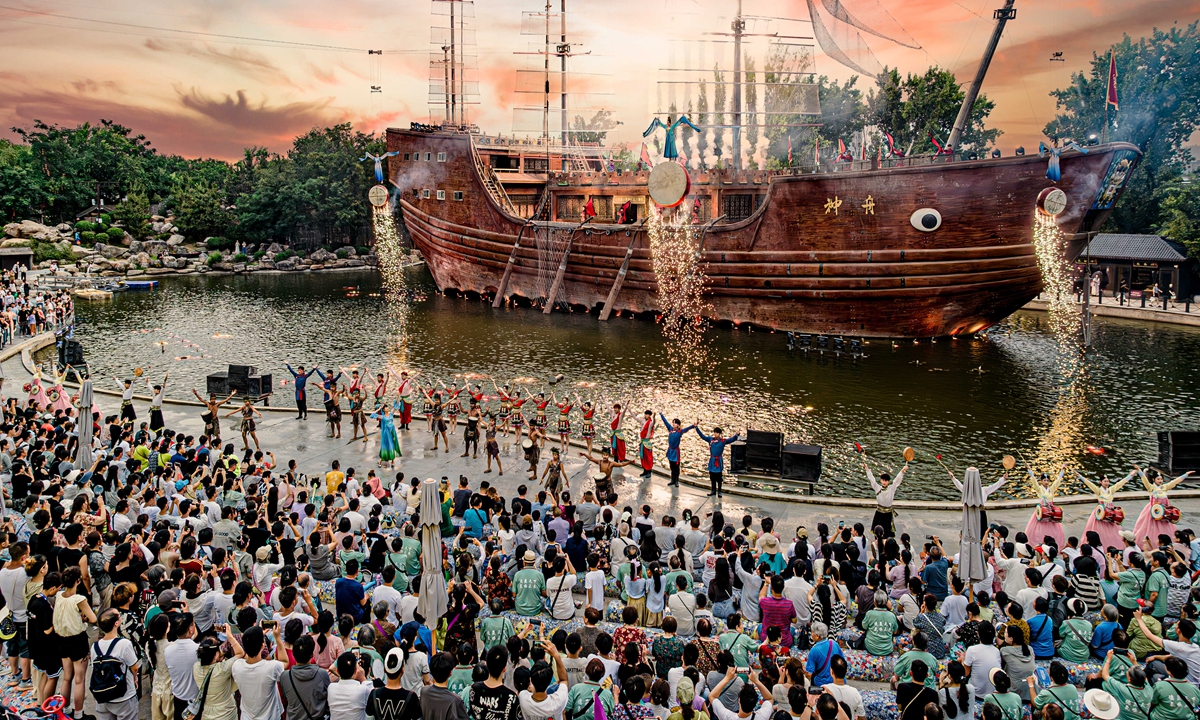 Boosted by China's visa-free policy, the "one ticket for three days" offer adopted by many scenic areas in the city has become even more appealing. It allows visitors to enter the same scenic area multiple times within three days with a single ticket. "We don't have to rush. We can take our time watching the performances and wandering around. One day is nowhere near enough — this policy is so thoughtful," a visitor surnamed Yang, who is from Denmark and traveling with her husband, told the Global Times in the Millennium City Park. Meanwhile, Kaifeng offers a full-service experience for foreign visitors: bank branches provide bilingual assistance for cash withdrawals and currency exchange; the immigration hall has a dedicated green channel for visa-free transit travelers, enabling quick handling of lost documents and other emergencies; and multilingual signage has been upgraded across all A-level scenic spots, tourist hubs, museums, and pedestrian streets, the bureau said. All of these measures resonate with the spirit of the Central Urban Work Conference in 2025, which highlights efforts to build culturally-vibrant cities characterized by high ethical and moral standards. By effectively protecting and revitalizing Song culture and delivering high-quality services, Kaifeng has made foreign visitors not only willing to come but also willing to stay longer and return — precisely practicing the requirements of building a "livable" and "culturally vibrant" city. As a new day begins, Large-scale immersive performances and processions unfold, NPC characters weave through the ancient streets interacting with visitors, and the entire city is illuminated by light, sound, and the everyday vitality of the marketplace. A thousand years ago, Bianliang was an open and inclusive world-class metropolis. Today's Kaifeng, with its Song-dynasty elegance and sincere hospitality, once again opens its doors to the world — and quietly captures the hearts of many who have come from afar. 。
二 | 好房子 幸福生活的标配杭州日报讯 一场关乎千家万户居住品质的变革正在杭州破题起势。去年,《杭州市住宅品质提升设计导则(试行)》(以下简称《导则》)正式落地,杭州成为全国首批出台“好房子”建设指导文件的城市之一。
三 | 历经一年多探索实践,这份细化出116条品质指标的“杭州标尺”,量出了怎样的行业变化?日前,市建委召开《导则》实施情况座谈会,邀请全市房地产开发企业、设计单位代表及行业专家等40余人,对试点项目施行情况开展“回头看”。去年以来,杭州45宗住宅品质提升建设试点地块完成出让,29宗已开工建设,9宗率先入市预售并收获市场肯定,29个项目入选全省高品质住宅试点项目库、数量位居全省第一,典型做法入选全省住建系统改革典型案例、经验清单……从制度破题到试点铺开,从新房建设到旧房焕新,杭州聚焦“好标准、好设计、好材料、好建造、好运维”,系统构筑起“1个顶层设计、N个保障政策、1套闭环协同推进机制”的“1+N+1”品质住宅建设工作体系,全力推进安全、舒适、绿色、智慧的“好房子”建设,加快打造“住有优居”的杭州样板。立标定规 重塑品质“硬杠杠”“好房子”怎么建?杭州的答案是,标准定方向、划底线。2025年3月,市建委出台《杭州市进一步开展住宅品质提升工作的实施意见》(以下简称《实施意见》)。作为杭州好房子建设的顶层设计,《实施意见》以“便捷宜居、健康舒适、安全耐久、绿色低碳、数字智慧、精细运维”为核心导向,坚持“政府引导市场推动、以人为本聚焦需求、试点先行稳步推进”三大原则,重点从优化规划选址、完善配套设施、加强环境协调、提升居住功能、保障住宅质量、提高安全性能、注重绿色节能、建设智慧住区、实现精细运维九大方面推动品质提升,引导住宅开发建设从“规模型”转向“品质型”、从“有没有”转向“好不好”。在此基础上,同年4月,《导则》落地,在国家、省级标准基础上,细化出116条可落地、可监管的品质指标。层高多少、隔音如何、采光怎样——这些关乎日常居住体验的细节,有了更严格的底线约束。“我们始终紧扣当下群众反映强烈的隔声、漏水、串味等突出问题,以及住宅品质提升的核心诉求,把‘群众满意、市场认可’作为检验‘好房子’建设成效的唯一标准。”市建委相关负责人表示。政策“组合拳”同步发力。容积率计算规则优化后,小区门厅、开放式风雨连廊等空间不再计入容积率,为品质营造留出更大空间。比如目前华丰板块的某在建试点项目充分运用计容新规,采用抬板设计提升居住品质,有效解决低层潮湿采光差、人车分流不彻底、地库阴暗压抑、景观视野受限等痛点。
四 | 同时,商品房装修审批管理办法进一步完善,支持房企增设不同风格、价位的室内精装修方案,更好匹配不同群体的多元居住需求。值得一提的是,杭州还鼓励企业根据自身优势和市场需求制定更高的企业品质标准,引导房地产开发企业跳出“重建设、轻运维”的传统模式:如绿城集团形成了“1个标准、6宅实操手册、N项技术系统”的产品力体系;滨江集团以“让老百姓住上好房子”为核心理念,提出“五好体系”新标准。
五 | 守住品质底线,离不开制度护航。
六 | 杭州构建部门会商、服务协调、“点对点”交底、党建联建四项工作机制,全力护航好房子建设,并率先将住宅品质提升、“好房子”建设工作纳入房地产开发企业信用管理体系,进一步优化房企信用记分标准体系,通过正向激励、反面惩戒双向发力引导企业转型提质,推进行业规范健康发展。今年,市发展改革委、市委改革办联合发布的“2025年‘信用杭州’十大场景”中,市建委申报的“杭州市房地产开发企业信用管理”场景成功入选。抓点验效 树好市场“风向标”标准好不好,市场来检验;房子好不好,试点看成效。截至目前,杭州已有29个项目入选全省高品质住宅试点项目库,实现市域全覆盖,数量居全省第一。走进主城区某在建试点商品房项目,所有楼栋的一层均采用架空设计,打造为公共配套空间。“这样设计,既保证了户内视野的通透与采光的充足,又有效扩充了业主的共享活动空间。
七 | ”某知名房企相关负责人告诉记者,在解决渗漏、隔声差等问题的基础上,还要重点聚焦适老适幼、全龄友好、空间可变、智能家居等品质标准,从好规划、好设计,到好配套、好设施,再到好运维、好服务,真正打造出群众认可的“好房子”。作为首个入市销售的试点项目,该项目入市4个月即整盘售罄,受到市场充分认可,这极大增强了企业坚持高品质建设的信心。不光推动商品房打造成高品质项目,在保障性住房领域,杭州也推动建设更多“好房子”。上城区笕桥生态公园保障房项目针对高空坠物这一城市痛点,采用“挑檐防护+智慧监控追溯”的组合方案,在绿色低碳上应用光伏建筑一体化系统,成功入选住房和城乡建设部首批保障房“好房子”案例集,为全国保障性住房品质提升提供了“杭州样本”。“新房子”要建成“好房子”,“老房子”也要改成“好房子”。杭州以老旧小区改造为抓手,坚持综合整治、自主更新双向发力,补齐设施短板,改善小区整体环境面貌,推动老房子向“好房子”迭代升级;推进完整社区建设,坚持体检先行、建管并重,抓实硬件提质与软件治理,提升社区服务治理水平,夯实“好房子”长效宜居根基。西湖区、萧山区率先推进老旧住宅微改焕新,通过科技赋能、标准引领、产品创新、产业联动等举措,探索多元化室内更新路径,带动老旧住宅室内居住品质升级。通过多路径、多维度、多模式统筹推进更新改造,让老房子、老小区焕发新生机。“好房子”标准在试点的落地,离不开科技的支持。当下,杭州正在大力推广新技术融入住宅建设,全市10项技术入选省级“人工智能+建筑业”创新应用案例,11项建筑新技术纳入省级示范案例;已累计培育11家智能建造省级试点企业,41个智能建造市级试点项目,覆盖设计、施工、生产、运维等全产业链。
八 | “我们将好房子科技创新作为全市住建领域科技创新重点方向,大力推广智能建造、装配式建筑、绿色低碳建材,把隔音降噪、外墙节能、全屋净水、智慧安防等新技术融入住宅建设,推进智能家居和数字家庭试点建设,让房子住得更安心、更舒心。”市建委相关负责人介绍。从标准制定到试点先行,再到信用约束,杭州“好房子”建设正在形成“立规矩—树标杆—强监管”的完整闭环。从“新房子”建成“好房子”到“老房子”改成“好房子”,从商品房到保障房再到老旧小区,杭州正以“群众满意、市场认可”为标尺,让更多家庭从“住有所居”迈向“住有优居”,绘就千家万户的幸福生活图景。 Current article:http://70eigu.miaorediancuisuilianzouguang.cyou/j1xomxw/i8v.html Published on:00:00:00 |


